Keep the keys. Spend on purpose. Ask someone licensed.
Crypto Safety is a clear guide to holding coins safely and spending them on purpose. Compare eleven cold wallets, with street prices and shop links, and ten crypto cards, including the X Money Card. Find a crypto lawyer, accountant, or real-estate specialist in your state — a local office comes first, and an open seat is filled by a firm that publicly serves that state. Prices change. This is a starting point, not tax or legal advice.
Studio photos show the shape, not the manufacturer's box. Prices are approximate U.S. street prices for September 2026. Buy from the maker or the Amazon link below — never a random reseller who asks for your seed.
When ordering from Amazon, verify the seller is the official manufacturer store and never initialize a device that arrives with pre-printed seed words.
No screenConfirm onthe phone
Beginners and travelAir-gapped
Tangem Pack of 3
Tangem
$70Est. street price, Q3 2026
Three metal NFC cards. Tap a phone, sign, done. Built for people who will not babysit a seed phrase on paper.
Link
NFC tap
Screen
None on the card
Source
Closed chip, app partially open
Air gap
Yes — NFC only
Pros
+Card-sized and very hard to lose in a drawer of cables
+EAL6+ secure element, no cables or Bluetooth
+The backup is extra cards, not a written seed, if you set it up that way
Cons
−You need a phone with NFC for every spend
−Firmware is not a fully open community build
−No screen on the card itself, so you trust the phone for what you are signing
The expensive air-gapped slab. Biometrics, a large display, and the highest consumer EAL certification the category advertises. Buy it from NGRAVE, not a random listing.
Link
QR only
Screen
Large color
Source
Certified, not fully open
Air gap
Yes
Pros
+Fully air-gapped QR signing
+EAL7-certified operating system — the claim other makers do not match
+Big screen and a biometric unlock
Cons
−The highest price on this page, and stock sells out
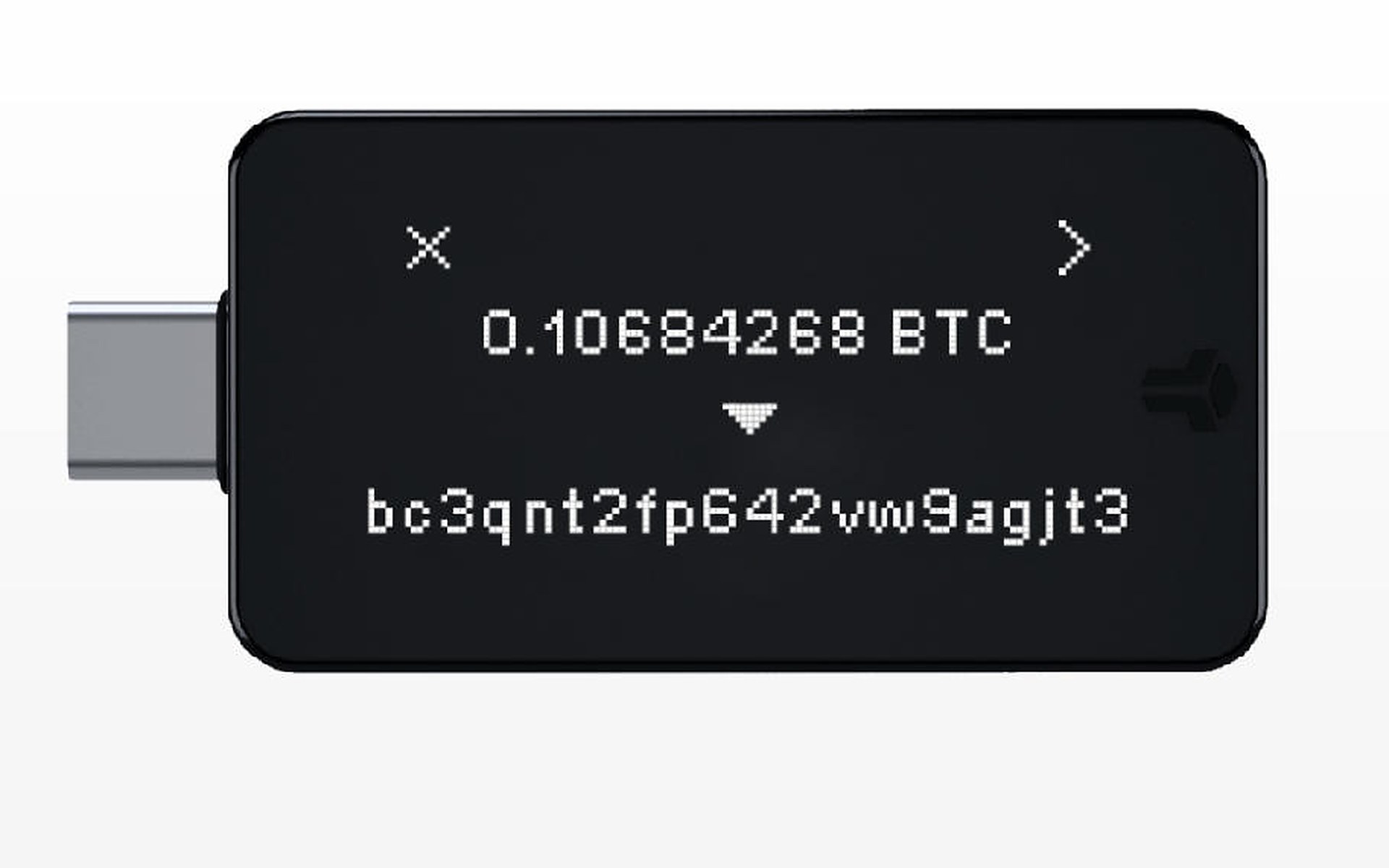
A thin metal signer with a 3.54-inch AMOLED screen. OneKey says four EAL6+ chips hold the keys, and that the camera can sign a transaction with no cable. Read the address on the device before you send.
Link
QR, USB-C, Bluetooth
Screen
3.54-inch color touch
Source
Open-source, audited
Air gap
Yes — camera QR
Pros
+Large color touchscreen, so the amount and address are readable
+Air-gap signing with the camera, plus USB-C and Bluetooth when you choose them
+OneKey lists four EAL6+ secure elements, a fingerprint button, and wireless charging
Cons
−$299, and it launched in October 2026, so it has less field history than Trezor or Ledger
−It is only air-gapped if you use the QR path. Bluetooth and USB are also on the device
−No Amazon listing here. Buy it from OneKey, and refuse a unit that arrives with a seed already printed
Trezor Safe 5 if you want open firmware. Ledger Flex if you want the screen and the app ecosystem. Keystone 3 Pro if the cable itself is the thing you do not trust.
Trezor Safe 5
Ledger Flex
Keystone 3 Pro
Street price
$129
$249
$149
Best for
Most people
Everyday multi-coin
DeFi with an air gap
Connection
USB-C
USB-C, Bluetooth, NFC
QR + microSD
Screen
Color touch
E Ink touch
4-inch color touch
Source
Open firmware
Closed
Open firmware
Air gap
No
No
Yes
Assets
9,000+ reported
5,500+ in the app
5,500+
How those three read on the same axes
A sketch of the specs already listed on each card. Not a lab score.
Trezor Safe 5
Ledger Flex
Keystone 3 Pro
02 / Spend cards
Ten ways to spend. One of them is the X Money Card.
Credit, debit, and self-custody. Rewards can be taxable. Availability and fees change by state and by month. Open the issuer's site before you apply.
Visa debit
X Money Card
Fee
$0 card fee
Rewards
Up to 3% USD back
Custody
Custodial USD at a partner bank
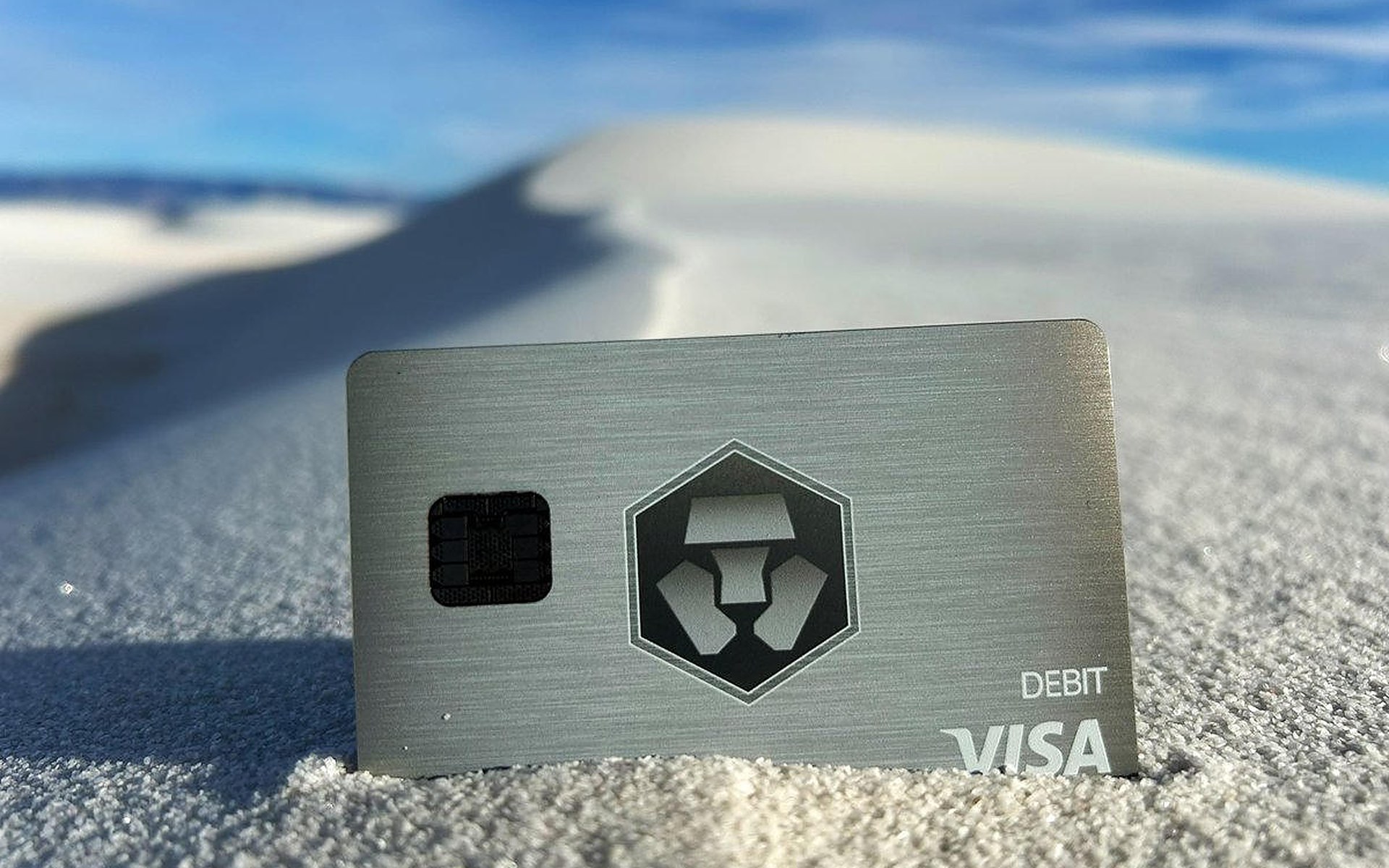
The metal Visa debit inside X. It spends a USD balance held at a partner bank, with cashback and no foreign transaction fee. This is not the business card-issuing product at xmoney.com, and as of mid-September 2026 it does not spend crypto directly.
Pros
+Up to 3% cashback in dollars, which does not swing with a token
+0% foreign transaction fee and ATM fee rebates on higher tiers
+Balance can earn a high advertised APY, with conditions
Cons
−Fiat only for now. Crypto top-up is not live
−Not in every state — New York has been excluded, and yield rules differ there
−Access rules shifted through 2026. Confirm the current subscription requirement in the app
A real U.S. credit card, not a prepaid balance. Rewards land in Bitcoin or dozens of other assets. Strongest everyday crypto card for people who already want a no-fee credit line.
Pros
+Up to 4% on gas, transit, and rideshare; 3% dining; 2% groceries
+No annual fee and no foreign transaction fee
+You choose the crypto the rewards are paid in
Cons
−It is a credit card — you still owe the bill in dollars
−Rewards are taxable income in the U.S.
−You are inside Gemini's account, not a self-custody wallet
Spend USDC or a rotating rewards category from a Coinbase balance. Coinbase One members can also look at the separate American Express that pays Bitcoin back.
Pros
+No annual fee and no foreign transaction fee on the debit card
+USDC can spend near 1:1
+Familiar if your coins already sit on Coinbase
Cons
−Custodial. Coinbase holds the balance until you tap
−Category bonuses rotate and are easy to miss
−The higher Bitcoin-back Amex needs Coinbase One and a large balance
Spend from a self-custody wallet. The card launched across 49 U.S. states in 2026, issued with Cross River Bank. You keep the keys until the moment you pay.
Pros
+Self-custody. Nothing is preloaded onto an exchange
+Virtual card is free, with Apple Pay and Google Pay
+Metal tier raises cashback and drops foreign fees
Cons
−Metal is $199 a year if you want the higher rate
−Cashback is in mUSD, and you still need KYC
−A smart-wallet spend is a new habit if you only know debit cards
A U.S. debit card that pushes rewards into Bitcoin, with spins and merchant boosts that sometimes pay more. Built for people who want sats, not an exchange token.
Pros
+Rewards in Bitcoin, not a platform token
+No annual fee on the base card
+Extra boosts at some merchants
Cons
−Foreign transactions and ATMs cost money unless you pay for Fold+
−It is prepaid spending, not a credit line
−Boosts are uneven, so the headline rate is not every swipe
Borrow against crypto, or spend in a cash mode, without selling the stack first. A DeFi-native card for people who already use ether.fi, not a first debit card.
Pros
+Spend or borrow against collateral instead of a market sell
+Cashback on everyday spending, and a higher rate on the first couple of thousand dollars a month
+Fits a self-custody DeFi habit
Cons
−Collateral can be liquidated if the asset price drops
Load crypto, spend dollars. Useful where it is open. The U.S. card has been paused at times, so treat availability as something you check, not something you assume.
Pros
+Straightforward convert-and-spend at Mastercard merchants
+No annual fee
+Long track record in crypto payments
Cons
−U.S. issuance has been paused — confirm before you apply
−Foreign transaction fee around 3% when the card is live
−Conversion spread means you do not get the spot price
An on-chain Visa. Money sits in a Safe you control and settles when you pay. The direct card is scheduled to stop spending on December 20, 2026 — read that before you order one.
Pros
+Self-custody Safe, not an exchange balance
+Personal IBAN and SEPA on supported accounts
+No foreign exchange fee on the classic terms
Cons
−Direct Visa spending ends December 20, 2026
−Mostly EEA and UK, not a U.S. everyday card
−Cashback needs a GNO hold, and the token can drop
Gemini if you want a no-fee credit card that pays crypto. X Money if you want dollar cashback and a high yield, knowing it does not spend coins yet. MetaMask if the point is to keep custody until the tap.
Gemini Credit Card
X Money Card
MetaMask Card
Type
Mastercard credit
Visa debit
Mastercard debit
Network
Mastercard
Visa
Mastercard
Fee
$0 annual
$0 card fee
$0 virtual, Metal $199/yr
Rewards
Up to 4% in crypto
Up to 3% USD back
Up to 1–3% in mUSD
Custody
Exchange rewards, pay the fiat bill
Custodial USD at a partner bank
Self-custody until the tap
FX
0%
0%
0% on Metal, check standard
Where
United States
Many states, not all
49 states
03 / Platforms
Ten places people actually buy.
Uphold is first, and marked Top. Coinbase is second. Those two buttons are referral links. The other eight go to the public site. None of these hold your keys the way a cold wallet does. Fees, coins, and which states they serve change.
Top
Multi-asset wallet
Uphold
One balance for crypto, several currencies, and precious metals. The app is the product: buy, hold, and move without a separate pro terminal.
Pros
+Crypto and metals in the same wallet
+A short path from sign-up to a first buy
+Works as a spending balance, not only a trading book
Cons
−Uphold holds the assets — this is not a cold wallet
−Many prices are a spread, not a visible order book
A 2026 sketch, not a return and not advice. Confirm the numbers with the IRS, your state, or a licensed preparer before you file.
Federal
Crypto is property. Selling, swapping, or spending it is a taxable disposition. Moving coins between your own wallets is not, unless the fee is paid in crypto. One year or less is ordinary income, 10% to 37%. Longer than a year is 0%, 15%, or 20%. High earners can add 3.8%. Staking, mining, and pay are income first, then a later sale is a separate gain. Losses offset gains, and up to $3,000 of a net loss can reduce other income. Brokers send Form 1099-DA. You still file Form 8949 and Schedule D.
State
Your home state taxes the gain unless a statute says otherwise. Most use the same rate as wages. Missouri can exclude a long-term gain. Alaska, Florida, Nevada, New Hampshire, South Dakota, Tennessee, Texas, and Wyoming have no personal income tax. Washington still taxes large long-term gains. No state tax does not cancel the federal tax.
Local
Most cities do not tax a capital gain. Where they do, it stacks on federal and state tax. New York City, Maryland counties, and Indiana counties are the usual cases. Some Michigan and Ohio cities tax income. Pennsylvania local taxes usually hit wages, not gains.
California state tax
California taxes crypto capital gains as ordinary income, with no long-term discount. The top rate is 13.3%, which includes the 1% Mental Health Services Tax on income over $1 million.
California local tax
California does not add a city income tax on capital gains.
05 / Licensed counsel
Three public desks, not a phone book we invented.
Search any state. An office in that state is listed first. If a role still has an open seat, it is filled by a firm in another state that publicly takes clients there. A listed phone or email is copied from that firm's public page. Confirm it before you send anything.
Desks for California · Crypto lawyer. In-state offices first, then firms that work here from another state. Weekly edition: week of Oct 26, 2026. Last pass Sep 28, 2026.
Desk 1
Crypto lawyer
Works here from another state
Gordon Law Group
Andrew Gordon, Esq., CPA · Managing Partner
Tax attorneys and CPAs on the same crypto matter. IRS letters, 1099-DA, audits, and returns. The firm says it works in every state from the Skokie office. New matters start by phone, [email protected], or the site form. [email protected] is for current-client bills.
Gordon Law Group sits outside California and publicly takes clients there. Confirm the license before you send records.
Rafael Yakobi, Esq. · Founder and Senior Managing Partner
A cryptocurrency-only firm. Rafael Yakobi is admitted in California and appears in federal courts. The firm lists offices in Florida, New York, Tennessee, and Texas. (619) 317-0722 is the phone on his California bar record. New inquiries still go to [email protected] first.
The Crypto Lawyers sits outside California and publicly takes clients there. Confirm the license before you send records.
Ask them to manage the revenue and lower the tax — lawfully.
Addressed to Andrew Gordon, Esq., CPA at Gordon Law Group. "No tax" only happens when the facts support it: losses, a long hold that is still taxed later, a gift, or a break the statute actually gives you. Do not ask a professional to hide gains. This letter never asks for a seed phrase.
Subject: Help managing crypto revenue and the tax on gains — California
Hello Andrew Gordon, Esq., CPA,

I am writing to Gordon Law Group. I live in California and I am looking for a crypto lawyer to help me manage and use revenue from cryptocurrency, and to pay the least tax the law actually allows on gains. If a lawful exclusion, offset, or deferral can bring the tax to zero on part of it, I want to know. I am not asking anyone to hide wallets, skip a 1099-DA, or file a return that is not accurate.

Please tell me:
1. Whether you can take a client in California, and what the engagement would cover.
2. Which lawful tools might fit my facts. Examples I have heard, not instructions: long-term versus short-term holding, specific identification, tax-loss harvesting, donating appreciated crypto, and entity or retirement structures you actually use.
3. The records you need: exchanges, wallets, cost basis, and any IRS or state letters.
4. Your fee, and whether a first reply makes me a client.

My situation:
- State: California
- What I did this year (buy, sell, stake, DeFi, mining, or getting paid in crypto):
- Rough size of gains or losses:
- Any IRS or state notice:

Thank you,
[Your name]
[Your phone]
[Your email]

I understand you cannot promise that I will owe nothing, and that taxable gains still have to be reported.
Billfodl — Letter tiles in a stainless plate. Easy to check twice.
Blockplate — A flat stamped plate. Simple, and it stacks in a safe.
CRYPTOTAG Zeus — Titanium punch letters. Handles a house fire better than paper.
Coinkite Seedplate — A small steel card aimed at Coldcard and other 12-word seeds.
Scam field guide
Address poisoning. A stranger sends dust from an address that looks like yours. Never copy from history. Copy from the device.
Fake support. No maker, exchange, or "recovery agent" needs your seed. Hang up and open the app yourself.
Drainer links. A page that asks you to connect and sign a permit can empty a hot wallet. Read the domain one character at a time.
I've been hacked
Move what you still control to a new wallet, created on a clean device. Do not reuse the seed.
Revoke token approvals from a computer you trust, or skip that if the machine itself is suspect.
Call the exchange or card issuer and freeze the account. Change email and phone from a different device.
Write down transaction IDs, addresses, and the time.
Report it to the FBI's Internet Crime Complaint Center at ic3.gov. Then talk to a lawyer on the state desk.
Heirs
A seed in a safe your family cannot find is a lost fortune. Leave instructions, not the words, in the estate file. A 2-of-3 setup lets an heir plus a lawyer or a second plate move the coins without one person holding everything. Use the lawyer desk and the letter template. Do not put the seed in the will.
A 2-of-3 multisig
Three signers, any two can spend. Home: Trezor Safe 5. Travel bag: Keystone 3 Pro. Lawyer or other building: BitBox02. Lose one device and the coins stay put. Lose two and you need the remaining device plus its backup.
Stablecoin safety
USDT is issued by Tether. It is the deepest dollar token, and Tether can freeze an address.
USDC is issued by Circle, with cash and short Treasuries. Circle can also freeze.
USDS comes from Sky, the line that followed Dai. A peg depends on collateral and liquidity, not a promise printed on the token.
A depeg means the token trades below a dollar. Do not assume it snaps back. Size the position as if the issuer or the collateral can fail.
Privacy, home, and the bank
Do not post balances, addresses, or photos of hardware. That is a map for a theft.
Ask data brokers to remove your home address. A public record plus a crypto post is how people get found.
If you hold a lot at home, use a safe and an alarm. The seed plate should not be next to the device.
Banks freeze wires they cannot explain. Keep exchange statements, the reason for the transfer, and a note of where the coins came from. A freeze is not a hack. Call the bank, then a lawyer if it sticks.
Which wallet fits me?
Setup checklist
0 of 7
Spot the scam
1 / 5 · Support chat
Tap to define
The word list that recreates the wallet. Anyone who sees it can take the coins. Never photograph it.